On Oct 20, 2026
How to Choose the Best Construction Estimating Company for Your Project
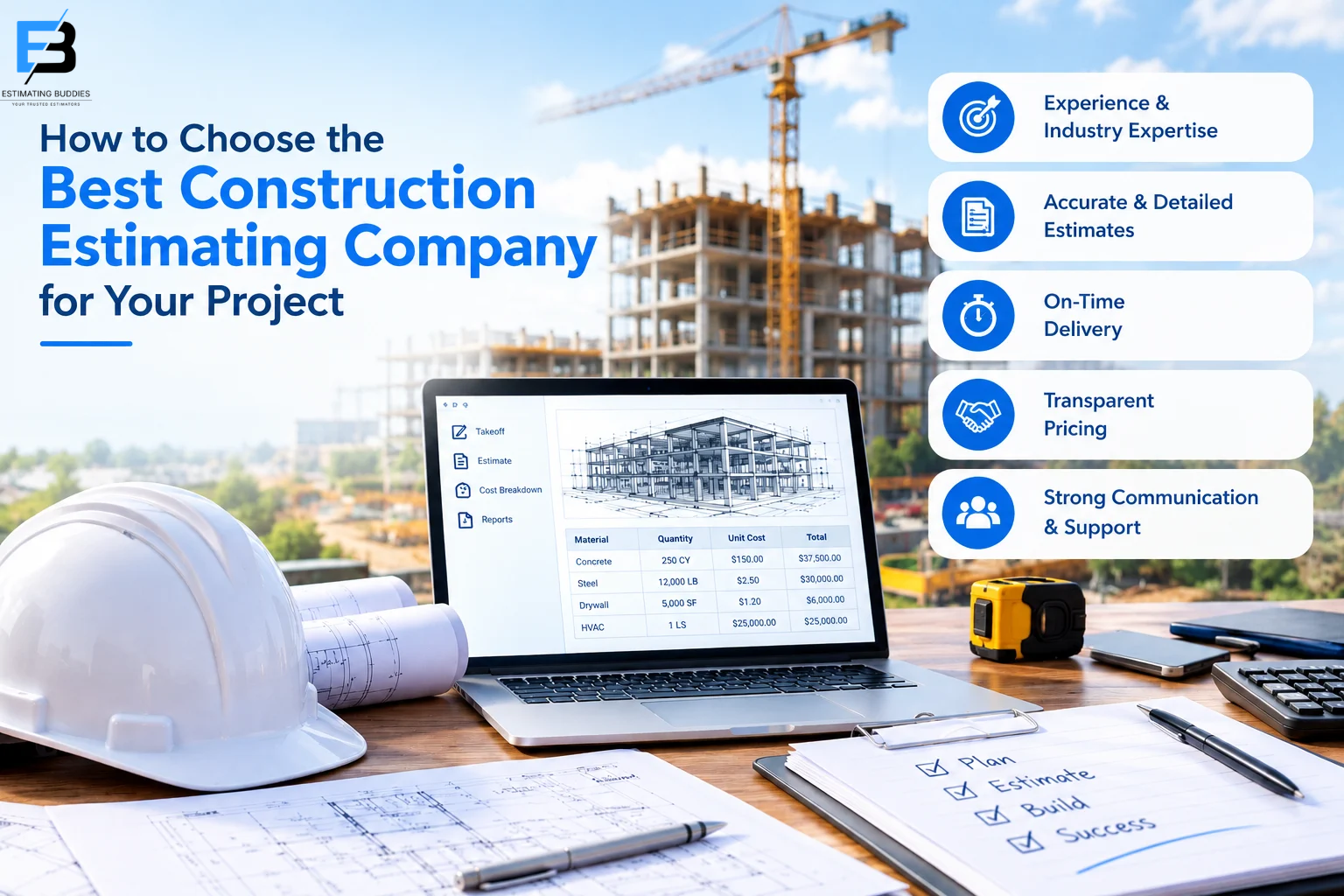
An estimate is the foundation of every construction project. Get it right, and you win bids, secure financing, and protect your margins. Get it wrong, and you face change orders, blown budgets, and strained relationships. Choosing the right construction estimating company is one of the most important decisions you'll make before breaking ground. This guide walks you through what to look for, what to ask, and what red flags to avoid.
Why the Estimating Partner You Choose Matters
A construction estimate does far more than put a number on paper. It drives your bid strategy, your project financing, your procurement plan, and your schedule. Underestimate, and you eat the cost. Overestimate, and you lose the job.
Many contractors, developers, and owners outsource estimating because it is faster, more cost-effective than hiring in-house staff, and scalable during busy seasons. But the quality gap between providers is wide, so due diligence is essential.
1. Look for Relevant Project Experience
Not all estimators are interchangeable. A firm that excels at residential remodels may struggle with a multi-story commercial build or industrial facility.
Ask potential partners:
- Have you estimated projects of similar type, size, and complexity?
- Which trades do you specialize in (concrete, MEP, roofing, drywall, sitework, etc.)?
- Can you share sample estimates or references from comparable projects?
Experience with your project type means fewer missed scope items and more realistic pricing.
2. Verify Their Technology and Methods
Modern estimating relies on digital takeoff and cost-database tools. Reputable firms typically work with platforms such as Bluebeam, PlanSwift, Trimble, Procore, or STACK, and many reference cost data from providers like Gordian's RSMeans.
The tools matter less than how they are used. Ask how the company:
- Performs quantity takeoffs (manual, digital, or BIM-based)
- Sources and updates material, labor, and equipment pricing
- Adjusts for your local market and regional labor rates
A company that relies on outdated national averages will not give you a reliable local number.
3. Check Accuracy, Process, and Transparency
A trustworthy estimating company can clearly explain how it arrives at its numbers. Look for:
- Detailed breakdowns: Line-item estimates by trade or CSI division, not just a lump sum
- Clear assumptions and exclusions: So there are no surprises later
- A quality-control process: A second estimator reviewing the work before delivery
- Contingency and escalation logic: Especially important in volatile material markets
Ask how they handle revisions when plans change. Addenda and design updates are inevitable.
4. Compare Turnaround Time and Responsiveness
Bid deadlines are unforgiving. A great estimate delivered late is worthless. Ask for realistic turnaround times and whether rush service is available. Pay attention to how quickly they respond during the proposal stage, because that is usually a preview of how communication will go once you're a client.
5. Understand the Pricing Model
Estimating companies charge in different ways: flat fees, a percentage of project value, or hourly rates. None is automatically best, but you should understand exactly what's included.
Watch out for:
- Unusually low prices that suggest rushed or templated work
- Hidden fees for revisions or re-bids
- Vague scope descriptions
The cheapest estimate can become the most expensive decision you make if it leads to a bad bid.
6. Know Your Options: Types of Estimating Providers
The market includes several kinds of providers, and the right one depends on your needs.
- Large cost-management consultancies: Firms such as Rider Levett Bucknall, Cumming, and Turner & Townsend serve large commercial, institutional, and infrastructure projects with full cost-consulting services.
- Specialized estimating service firms: Dedicated outsourced estimators who focus on takeoffs and bid-ready estimates for contractors and subcontractors across trades.
- Software-plus-service providers: Companies that pair estimating platforms with consulting or support.
- Freelance estimators: Flexible and often affordable, but capacity, consistency, and accountability can vary.
For many general contractors, subcontractors, and developers, a specialized estimating firm offers the best balance of expertise, speed, and cost. Always compare at least three providers side by side.
7. Read Reviews and Call References
Testimonials on a website are a start, but real references tell the full story. Call past clients and ask:
- Was the estimate accurate compared with actual costs?
- Were deadlines met?
- How were revisions handled?
- Would you hire them again?
Online reviews and industry referrals can also reveal patterns that a sales pitch won't.
8. Confirm Confidentiality and Professionalism
Your plans and pricing strategy are sensitive. Make sure the company will sign a non-disclosure agreement, protect your data, and carry appropriate insurance. Professional credentials, such as certified professional estimator (CPE) designations from the American Society of Professional Estimators, are a positive sign as well.
Red Flags to Avoid
- No sample work or references
- Reluctance to explain their methodology
- Guaranteed "lowest price" claims without reviewing the plans
- Poor communication before you've even signed
- No process for handling plan revisions
Quick Checklist
Before you commit, confirm that the company:
- Has experience with your project type and size
- Uses current local pricing data
- Provides detailed, transparent estimates
- Meets your deadlines
- Offers clear, fair pricing
- Has strong references and confidentiality practices
Final Thoughts
The best construction estimating company is the one that combines accurate numbers, relevant experience, transparent communication, and reliable turnaround, and that treats your project as if it were their own. Invest time upfront in choosing the right partner, and your estimates will become a competitive advantage instead of a risk.
Ready to review your next estimate?
Share your drawings, project scope, and deadline to discuss a clear, trade-specific estimate.
Contact UsFrequently Asked Questions
What should I look for when choosing the best construction estimating company?
Look for a construction estimating company with experience in your project type, accurate quantity takeoffs, current material and labour pricing, clear cost breakdowns, and reliable turnaround times. Check whether the company can estimate residential, commercial, and industrial projects and provide trade-specific estimating services.
How can professional quantity takeoff services improve construction cost estimates?
Professional quantity takeoff services help contractors calculate the quantities of materials required from construction drawings and specifications. Accurate measurements of concrete, drywall, roofing, flooring, and other materials can reduce quantity errors, improve budget planning, and support more competitive bids.
Why should contractors hire specialized roofing estimating services?
Roofing estimating services help contractors calculate roof areas, underlayment, shingles, metal panels, flashing, insulation, and other required materials. A specialized estimator can also account for roof slopes, waste factors, labour costs, and project-specific requirements to prepare more reliable roofing bids.
What is the importance of electrical estimating services in construction projects?
Electrical estimating services help determine the quantities and costs of wiring, conduits, panels, switches, lighting fixtures, and other electrical components. They also support labour cost calculations and help electrical contractors prepare detailed bids while reducing the risk of missing essential items.
How do plumbing and mechanical estimating services differ?
Plumbing estimating services focus on water supply lines, drainage systems, sanitary piping, fixtures, valves, and related materials. Mechanical estimating services typically cover HVAC equipment, ductwork, mechanical piping, ventilation systems, and associated installation costs. Both services help contractors understand project costs before bidding.
Can a construction estimating company provide concrete and structural steel estimates?
Yes. Many construction estimating companies provide concrete and structural steel estimating services. Concrete estimates may include foundations, slabs, formwork, reinforcement, and concrete volumes, while structural steel estimates can cover beams, columns, connections, and steel quantities. These estimates help contractors plan materials, labour, and project budgets.
How do BIM estimating services help improve construction cost accuracy?
BIM estimating services use information from Building Information Models to support quantity extraction, material measurement, and cost planning. When the model contains reliable information, BIM-based estimates can help identify quantity discrepancies, coordinate project elements, and improve communication between estimators, designers, and contractors.
How much do construction estimating services cost, and how quickly can I receive an estimate?
The cost of construction estimating services depends on project size, drawing complexity, the number of trades involved, the required level of detail, and the turnaround time. Some estimating companies offer delivery within 24–48 hours for suitable projects, while larger or more complex projects may require additional time. Request a quote based on your drawings, specifications, project scope, and deadline.