On Oct 15, 2026
How to Choose Quantity Takeoff Services for Your Project
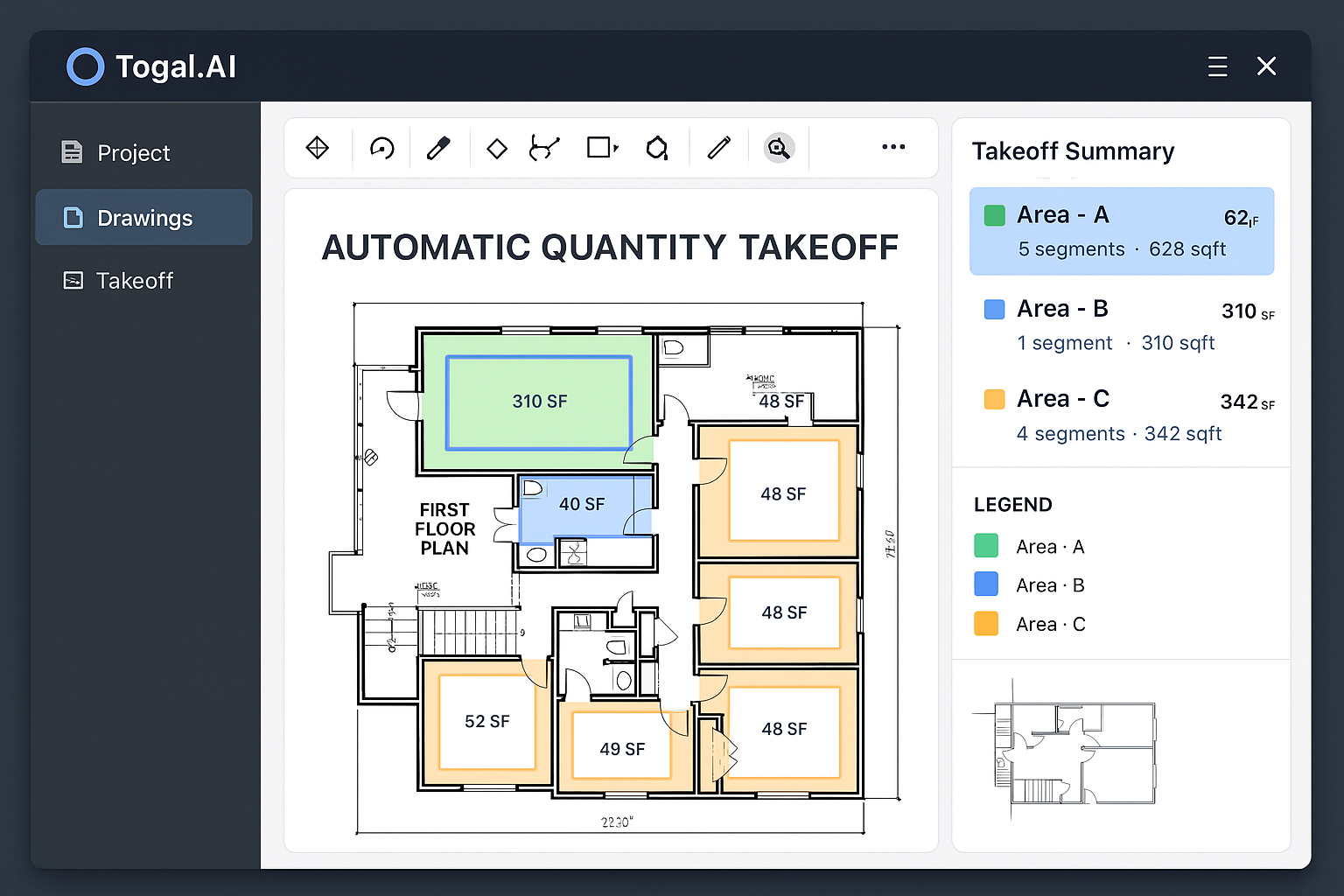
Accurate material quantities are essential to preparing reliable bids, planning purchases, and keeping construction work on schedule. Whether you are pricing a residential build, a commercial renovation, or a large multi-trade project, the quality of your quantity takeoff can affect both your budget and your bid. Choosing the right quantity takeoff service provider means looking beyond price alone. You need a team that understands construction drawings, follows a consistent measurement process, and delivers information in a format your team can use.
What Are Quantity Takeoff Services?
Quantity takeoff services involve reviewing drawings, plans, and specifications to measure and list the materials and components required for a project. Depending on the scope, a takeoff may cover concrete volumes, drywall areas, framing lumber, roofing squares, flooring, piping, electrical conduit, fixtures, or other trade-specific items. A useful takeoff report typically identifies the item, unit of measurement, and calculated quantity. Some providers also organise results by trade, building area, drawing sheet, or specification. Clear reporting makes it easier to check quantities, request supplier quotes, and pass information to estimators and project managers.
1. Look for Experience with Your Project Type
Start by checking whether the provider has experience with projects similar to yours. Residential, commercial, and industrial projects can differ in drawing complexity, specifications, and measurement requirements. A team familiar with your project type is more likely to understand the relevant details and flag missing or unclear information for review. Ask about experience with new construction, renovations, additions, tenant improvements, or multi-unit developments, as applicable. Trade-specific experience also matters when the project includes complex structural or building systems.
2. Confirm the Trades and Scope They Can Measure
Before engaging a provider, confirm that its team can complete the takeoff for the trades included in your plans. Some projects require one trade only, while others need coordinated quantities across multiple scopes. For example, you may need concrete takeoffs for foundations and slabs, framing quantities for walls and roof structures, or drywall takeoffs for interior finishes. Other projects may require roofing takeoff services, flooring quantity takeoffs, masonry quantities, rebar takeoffs, or sitework and earthwork measurements. For building systems, check whether the provider supports plumbing takeoff services, electrical takeoff services, and mechanical or HVAC takeoffs. For projects that require broader coordination, MEP estimating services may be relevant. Where needed, connect these scopes to your internal estimating process so that trade quantities are reviewed consistently.
3. Ask How Drawings and Revisions Are Handled
Construction drawings can change during bidding and design development. Ask how the provider records drawing dates, identifies revisions, and updates quantities when new sheets arrive. A dependable process should make it clear which drawing set was measured and what changed between versions. You should also ask how the team handles incomplete dimensions, conflicting notes, unclear specifications, and items that cannot be measured confidently. These should be identified for clarification rather than silently assumed.
4. Review the Sample Deliverable and Level of Detail
The final report should be easy for your team to check and use. Ask for a sample with sensitive project information removed. Review whether the report includes item descriptions, units, quantities, trade or area breakdowns, drawing references where appropriate, and notes about assumptions or exclusions. Find out which file formats are available, such as Excel spreadsheets, PDF reports, or files compatible with your workflow. If your team uses digital measurement tools, ask whether the provider works with software such as Bluebeam Revu, PlanSwift, or On-Screen Takeoff. Software alone does not guarantee accuracy, so the review process is just as important.
5. Understand the Quality-Control Process
Ask how quantities are checked before delivery. Quality control may include a second review of key measurements, cross-checking against drawings and specifications, checking units, and confirming that all agreed areas and trades have been covered. It is also useful to understand how exclusions, allowances, and unresolved questions are documented. A clearly stated assumption is easier to review than an unexplained number in a spreadsheet.
6. Compare Turnaround Time with Project Deadlines
A quick delivery is valuable only if it leaves enough time for your team to review the work before the bid deadline. Share the drawing set, project scope, required format, and due date when requesting a quote. Ask the provider to confirm the delivery schedule and explain how major revisions or additional trades may affect timing. For urgent tenders, establish whether partial deliveries are possible and agree on which scopes should be prioritised first.
7. Compare Pricing and What Is Included
Quantity takeoff service pricing may depend on project size, drawing quality, number of trades, detail level, turnaround, and revision requirements. Compare proposals based on the same scope instead of choosing solely by the lowest fee. Check whether the price includes all requested trades, a stated number of drawing revisions, clarification support, and the file formats you need. Confirm whether cost pricing is included or charged separately. A quantity takeoff generally provides measured quantities; material estimating adds unit prices and calculates expected material costs. A full construction estimate may also include labour, equipment, overhead, and profit.
8. Check Communication and Project Support
Good communication helps prevent avoidable gaps. Choose a provider that asks relevant questions, confirms the scope before starting, and explains how uncertainties will be reported. You should know whom to contact if you identify a discrepancy or receive revised drawings. For ongoing work, ask whether the provider can maintain a consistent reporting format across projects. This can make it easier to compare bids and review quantities over time.
Questions to Ask Before Hiring a Quantity Takeoff Provider
- Have you completed takeoffs for projects with a similar size, type, and trade scope?
- Which drawing formats and measurement software do you support?
- How do you document assumptions, exclusions, and unclear drawing details?
- What quality checks are completed before delivery?
- What is included in the quoted fee, and how are revisions handled?
- Can you provide the report in the spreadsheet or PDF format our team uses?
- How do you protect project files and confidential information?
Why Trade-Specific Takeoffs Matter
A project can include many material categories, and each trade has its own measurement requirements. Concrete quantities may be based on dimensions and volume; drywall is commonly measured by area; piping and conduit may require linear measurements; and roofing may be measured by area with attention to pitch, details, and waste. The provider should understand the units, components, and project details relevant to each trade. Depending on your scope, you may want to combine related services such as Concrete Estimating Services, Drywall Estimating Services, Roofing Estimating Services, Masonry Estimating Services, Rebar Estimating Services, Sitework Estimating Services, Plumbing Estimating Services, Electrical Estimating Services, Mechanical Estimating Services, and MEP Estimating Services.
Choosing a Service That Fits Your Workflow
The right provider should make your estimating workflow clearer, not more complicated. Start with a defined scope, share the latest drawings and specifications, agree on the required level of detail, and confirm the delivery format. Review the sample report and quality-control process before committing to a larger or recurring workload. For contractors and subcontractors who need structured quantities for tendering or procurement, Estimating Buddies offers quantity takeoff support across a range of construction trades and project types. Share your project scope and drawing set to discuss the deliverables and timeline that fit your needs.
Ready to review your next takeoff?
Share your project scope and drawing set to discuss the deliverables and timeline that fit your needs.
Contact UsConclusion
Choosing the right quantity takeoff services requires evaluating trade experience, reporting detail, revision handling, quality control, turnaround, pricing, and communication. A reliable takeoff should be traceable to the drawings, clear about assumptions, and practical for your team to review. When quantities are accurate and well organised, contractors are better positioned to price work, plan material orders, and prepare informed bids. If your next project needs a clear breakdown of material quantities, consider professional Quantity Takeoff Services as a foundation for procurement and cost planning.
Frequently Asked Questions
What information should I provide for a quantity takeoff quote?
Provide the latest drawings, specifications, project location if relevant to the scope, the trades required, preferred report format, and deadline. Mention any areas or items that should be excluded.
Do quantity takeoff services include material prices?
Not always. Many takeoff services provide quantities only. Material estimating applies unit rates and other relevant charges to calculate expected material costs. Confirm the deliverables before ordering the service.
Can one provider handle multiple construction trades?
Some providers support several trades, but you should confirm experience and scope for each one. Ask how trade quantities are separated and how overlaps between scopes are managed.
How can I check whether a takeoff is accurate?
Review the drawing set and revision date, check units and key dimensions, compare the report against the specified scope, and confirm that assumptions and exclusions are documented. A defined quality-control process can make this review easier.