On Oct 29, 2026
Quantity Takeoff vs. Material Takeoff vs. Cost Estimate: What's the Difference?
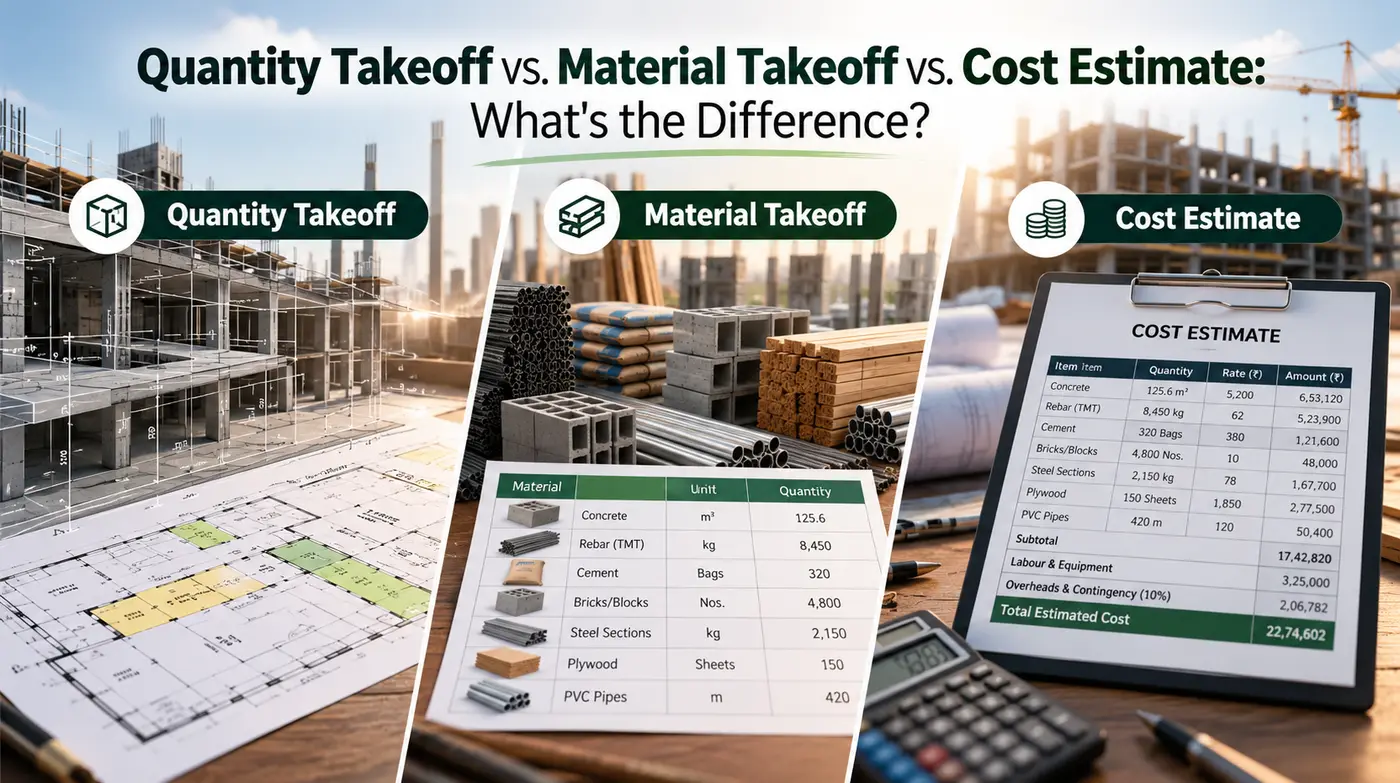
Construction projects require accurate planning, detailed measurements, and reliable cost calculations to stay within budget. Before starting a project, contractors, builders, and construction professionals need to understand how much work is involved, what materials are required, and how much the entire project will cost. Three common terms used during this process are quantity takeoff, material takeoff, and cost estimate. Although these terms are closely related, each serves a different purpose in construction planning and budgeting. Understanding the differences between them helps contractors prepare accurate bids, avoid material shortages, control project expenses, and make informed decisions before construction begins.
What Is a Quantity Takeoff?
A quantity takeoff is the process of measuring and calculating the quantities of construction work required for a project based on architectural drawings, structural plans, specifications, and other project documents. It identifies the amount of work needed for different construction activities, such as concrete installation, drywall construction, flooring, roofing, and electrical work. For example, a quantity takeoff for a commercial building may include the total square footage of flooring, cubic yards of concrete, linear feet of piping, and square footage of drywall.
Purpose of Quantity Takeoff
The primary purpose of a quantity takeoff is to determine the measurable quantities of work required to complete a construction project. These quantities help estimators prepare cost estimates, compare bids, and plan project resources.
A detailed quantity takeoff can help contractors:
- Determine the quantities of work shown in construction drawings.
- Prepare more accurate project bids.
- Identify the scope of work for different trades.
- Reduce measurement errors and missed items.
- Support material planning and cost estimation.
What Does a Quantity Takeoff Include?
A typical quantity takeoff deliverable may include:
- Item descriptions and construction activities.
- Measurements, including length, area, volume, and count.
- Quantities organized by trade or construction division.
- References to relevant drawings and specifications.
- Detailed quantity worksheets or takeoff spreadsheets.
For example, a flooring quantity takeoff may identify 4,500 square feet of tile flooring, 2,000 square feet of carpet, and 1,200 linear feet of baseboard. These quantities establish the measurable scope of work but do not necessarily include the final material prices, labor costs, equipment expenses, or total project cost.
What Is a Material Takeoff?
A material takeoff is the process of identifying and calculating the materials needed to complete a construction project. It focuses specifically on the products, components, and supplies required for construction. While a quantity takeoff measures the overall quantities of construction work, a material takeoff translates the relevant scope into a list of materials that must be purchased or supplied. For instance, a drywall material takeoff may identify drywall sheets, metal or wood studs, track, screws, joint compound, joint tape, and other necessary materials.
Purpose of Material Takeoff
The main purpose of a material takeoff is to help contractors determine what materials they need and how much to order. Accurate material quantities support purchasing decisions, supplier coordination, inventory planning, and waste management.
A material takeoff helps contractors:
- Prepare detailed material lists for purchasing.
- Estimate the quantities required for each construction activity.
- Plan material deliveries and storage.
- Account for appropriate waste allowances where applicable.
- Reduce overordering, shortages, and unnecessary expenses.
What Does a Material Takeoff Include?
A material takeoff deliverable typically contains:
- Material names and descriptions.
- Material quantities and units of measurement.
- Sizes, grades, specifications, or product types where required.
- Allowances for waste or cutting losses, when appropriate.
- Organized material lists for procurement and supplier quotations.
For example, a roofing material takeoff may include roof shingles, underlayment, flashing, drip edges, roofing nails, and other specified components. The exact list depends on the roof design, construction drawings, specifications, installation requirements, and applicable material allowances.
A material takeoff may include quantities only or may also include pricing, depending on the scope of the service. However, its primary focus is material identification and quantification rather than calculating the complete cost of the project.
What Is a Construction Cost Estimate?
A construction cost estimate is a calculation of the expected expenses required to complete a construction project. It uses information from quantity takeoffs, material takeoffs, supplier quotations, labor rates, equipment costs, and other relevant project requirements. Unlike a takeoff, which focuses on measurements or materials, a cost estimate assigns monetary values to the work and resources needed for construction. For example, an estimate for a residential construction project may include material costs, labor expenses, equipment rental, subcontractor charges, transportation, overhead, and profit.
Purpose of a Cost Estimate
The primary purpose of a cost estimate is to forecast the financial requirements of a construction project before work begins. Contractors and project owners use estimates to establish budgets, evaluate project feasibility, prepare competitive bids, and manage financial risks.
A construction cost estimate helps professionals:
- Determine the expected total project cost.
- Prepare bids and proposals for clients.
- Compare supplier and subcontractor quotations.
- Establish project budgets and cash flow expectations.
- Identify potential cost overruns.
- Evaluate alternative materials or construction methods.
What Does a Cost Estimate Include?
A detailed construction cost estimate may contain:
- Material costs.
- Labor costs and productivity assumptions.
- Equipment and machinery expenses.
- Subcontractor costs.
- Transportation and delivery charges.
- Waste allowances and other applicable cost factors.
- Overhead and profit.
- Contingency allowances, where appropriate.
- A total estimated project cost.
The final contents depend on the estimate's purpose, project stage, available information, and agreed scope.
For example, if a project requires 500 cubic yards of concrete, the cost estimate may combine the concrete quantity with the applicable supply rate, placement labor, pumping equipment, and other relevant expenses.
Quantity Takeoff vs. Material Takeoff vs. Cost Estimate: Key Differences
Although these three processes are connected, they answer different questions during construction planning.
| Comparison | Quantity Takeoff | Material Takeoff | Cost Estimate |
|---|---|---|---|
| Primary purpose | Measures quantities of construction work | Identifies and quantifies required materials | Calculates expected project expenses |
| Main question | How much work is required? | What materials and how much are needed? | How much will the project cost? |
| Main focus | Scope and measurements | Materials and procurement | Financial planning |
| Typical inputs | Drawings, specifications, and scope documents | Drawings, specifications, and construction details | Takeoffs, prices, labor rates, and project requirements |
| Typical deliverable | Quantity worksheets or takeoff spreadsheet | Material list or bill of quantities for purchasing | Itemized cost estimate or pricing proposal |
| Common users | Estimators, contractors, and project managers | Contractors, purchasing teams, and suppliers | Estimators, owners, general contractors, and developers |
The main difference is that a quantity takeoff measures the work, a material takeoff identifies the resources needed to perform that work, and a cost estimate determines the expected financial investment.
Example: How the Three Processes Work Together
Consider a hypothetical construction project that includes a concrete slab. The same project can require all three processes, but each produces a different result.
1. Quantity Takeoff
The estimator reviews the drawings and calculates the slab's dimensions.
Assume the slab measures 2,000 square feet and has a thickness of 6 inches. The concrete volume is:
2,000 sq. ft. × 0.5 ft. = 1,000 cubic feet
Dividing by 27 gives approximately 37.04 cubic yards of concrete, before any applicable ordering allowance. The quantity takeoff establishes the measurable scope of the slab.
2. Material Takeoff
The estimator identifies the materials required to construct the slab. Depending on the design, these may include:
- Ready-mix concrete.
- Reinforcing steel or welded wire reinforcement.
- Vapor barrier.
- Formwork materials.
- Other specified accessories.
The final quantities depend on structural drawings, reinforcement details, slab edges, site conditions, and applicable construction requirements.
3. Cost Estimate
The estimator assigns costs to the materials and other required work. For illustration, assume the following hypothetical rates:
| Item | Quantity | Unit Rate | Estimated Cost |
|---|---|---|---|
| Concrete supply | 37.04 cubic yards | $150/cubic yard | $5,556 |
| Reinforcement allowance | 1 lot | $1,200/lot | $1,200 |
| Formwork allowance | 1 lot | $800/lot | $800 |
| Labor and equipment | 1 lot | $2,000/lot | $2,000 |
| Subtotal | $9,556 |
These figures are illustrative only. They exclude any additional delivery charges, taxes, waste allowances, overhead, profit, and other costs not specifically listed. This example demonstrates how measurements and material requirements become financial calculations. The quantity takeoff provides the measurements, the material takeoff identifies the resources, and the cost estimate assigns prices to the required work and resources.
Which Service Does Your Construction Project Need?
The right service depends on your project's current stage and business requirements.
Choose Quantity Takeoff Services When:
- You need accurate measurements from construction drawings.
- You want to verify the quantities included in a contractor's bid.
- You need a clear breakdown of the project's scope of work.
- You want to prepare a cost estimate using measured quantities.
- You need trade-specific quantities for concrete, masonry, drywall, flooring, roofing, or other construction activities.
Professional quantity takeoff services can help contractors and estimators establish a reliable foundation for bidding and project planning.
Choose Material Takeoff Services When:
- You need a detailed list of materials for purchasing.
- You want to coordinate material orders with suppliers.
- You need to identify material sizes, types, and specifications.
- You want to reduce material shortages and unnecessary overordering.
- You need trade-specific material quantities for construction.
Material takeoff services are particularly useful for contractors managing procurement, subcontractors preparing material requirements, and builders planning construction resources.
Choose Construction Estimating Services When:
- You need to calculate the expected cost of a project.
- You are preparing a bid for a residential or commercial construction job.
- You need material, labor, and equipment costs.
- You want to compare construction methods or pricing alternatives.
- You need an itemized estimate to support budgeting and financial planning.
Professional construction estimating services can help contractors develop organized, drawing-based estimates and prepare more informed bids. If your project requires all three, you can use them together or select a combined service based on your project documents and scope.
Common Mistakes to Avoid
Confusing quantity takeoffs, material takeoffs, and cost estimates can lead to errors in bidding, purchasing, and budgeting.
Here are several common mistakes to avoid:
- Treating a quantity takeoff as a complete cost estimate. Measurements alone do not establish the final project cost. Pricing, labor, equipment, and other relevant expenses must also be considered.
- Ordering materials directly from incomplete measurements. Construction drawings and specifications should be reviewed carefully to identify material requirements, installation details, and applicable waste allowances.
- Ignoring material specifications. Two materials may have similar quantities but different sizes, grades, performance requirements, or prices. Material selections should match the project documents.
- Using outdated supplier prices. Material and labor costs can change over time and vary by location. Estimates should use appropriate, current pricing information.
- Overlooking labor and equipment expenses. A material list does not represent the entire cost of installation. Labor productivity, equipment, transportation, and other applicable expenses should be evaluated separately.
- Failing to check the scope of work. Missing construction activities, duplicated quantities, and unclear responsibilities can affect the accuracy of both takeoffs and cost estimates.
Reviewing drawings, verifying quantities, documenting assumptions, and checking current prices can help reduce these risks.
How Accurate Takeoffs Improve Construction Cost Estimation
Reliable cost estimation begins with a clear understanding of the project's scope and quantities. When measurements are inaccurate, the resulting material calculations and cost projections may also be incorrect. A well-prepared quantity takeoff helps establish the amount of work required. A detailed material takeoff supports procurement and resource planning. A carefully developed cost estimate combines these quantities with applicable rates and project expenses.
Together, these processes help construction professionals:
- Prepare more reliable bids.
- Improve budget planning.
- Reduce measurement and purchasing errors.
- Identify potential cost issues earlier.
- Compare project alternatives more effectively.
- Make better-informed construction decisions.
For contractors managing multiple projects, outsourcing takeoff and estimating work can also provide additional support during busy bidding periods.
Conclusion
Quantity takeoff, material takeoff, and construction cost estimation are closely related, but they serve different purposes. A quantity takeoff measures the work required for a project. A material takeoff identifies and quantifies the materials needed to complete that work. A cost estimate calculates the expected financial investment by considering materials, labor, equipment, and other applicable expenses. Understanding these differences helps contractors, builders, and project owners choose the right service for their needs and build a more reliable construction planning process. Whether you need accurate construction measurements, detailed material lists, or a comprehensive project cost estimate, working with experienced professionals can help you prepare better bids, manage resources, and make informed decisions before construction begins.
Need a quantity takeoff, material list, or project estimate?
Contact our team to discuss your drawings and the takeoff or estimating support your project needs.
Contact UsFrequently Asked Questions
What is the main difference between quantity takeoff and material takeoff?
A quantity takeoff measures the amount of construction work required based on project drawings and specifications. A material takeoff identifies the specific materials and quantities needed to complete that work. Both support construction planning, but a material takeoff focuses more directly on material procurement.
Is a material takeoff the same as a cost estimate?
No, a material takeoff and a cost estimate serve different purposes. A material takeoff identifies the types and quantities of materials required for a project, while a cost estimate calculates the expected expenses, including materials, labor, equipment, and other applicable costs.
What information is required to prepare a quantity takeoff?
A quantity takeoff typically requires architectural drawings, structural plans, construction specifications, and relevant project documents. These resources help estimators calculate measurements such as square footage, linear footage, cubic volume, and item counts for different construction activities.
What does a material takeoff include?
A material takeoff generally includes material descriptions, quantities, units of measurement, sizes, and specifications. Depending on the project, it may also include waste allowances and other procurement details to help contractors order the correct materials.
Can a quantity takeoff help reduce construction costs?
Yes. An accurate quantity takeoff helps contractors identify the required scope of work, prepare more reliable bids, and reduce errors caused by incorrect measurements or missing items. When combined with current pricing and proper cost estimation, it can support better budget control.
Who needs quantity takeoff and material takeoff services?
General contractors, subcontractors, builders, developers, and construction estimators can benefit from these services. Quantity takeoffs help determine the amount of work involved, while material takeoffs support purchasing, resource planning, and inventory management.
How does a quantity takeoff help in construction cost estimation?
A quantity takeoff provides the measured quantities needed to calculate project expenses. Estimators apply relevant material prices, labor rates, equipment costs, and other applicable expenses to these quantities to develop an itemized construction cost estimate.
Should I outsource quantity takeoff, material takeoff, or construction estimating services?
The right choice depends on your project requirements. If you need measurements, choose quantity takeoff services. If you need a detailed list of construction materials, choose material takeoff services. If you need a complete breakdown of expected project expenses, construction estimating services may be the best option. Many contractors outsource all three to save time, support accurate bidding, and manage multiple projects more efficiently.